 Couples TherapyCouples Therapy
AI-assisted couples support: private conversations for each partner, neutral mediation, and simulations to practise difficult conversations.
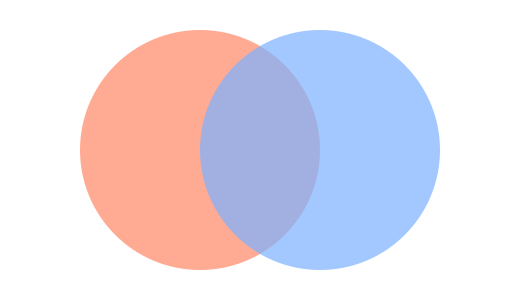
Even with the best intentions, each person speaks their own emotional language and communicates in their own way. When two different languages meet, misunderstandings arise easily: what one says is not what the other hears.
And in worn-out relationships we also tend to read the other person's words in the worst possible light. The companion acts as a translator: it helps you say things so they land as you intend, and hear them as they were meant.
Talk to your companion about what worries you. It listens, validates and helps you turn reproaches into needs. Everything stays in your private space.
The agent acts as a neutral mediator using only the information you have both consented to share, helping you turn positions into agreements.
Practise a difficult conversation: the agent plays your partner and adds coaching comments showing the tensions and how to rephrase them.
You don't need to be a couple: the same support works for any relationship between two people you want to care for — parent and child, siblings, friends or business partners.
The companion doesn't improvise: it works with the couples-therapy techniques with the strongest scientific evidence, built into its instructions and applied in every conversation.
It spots the "four horsemen" (criticism, contempt, defensiveness, stonewalling) and teaches their antidotes: soft start-up, appreciation, taking responsibility and breaks. It encourages the 5:1 positive-interaction ratio.
Beneath anger and reproach there is usually fear, sadness or a need for connection. The companion helps find and express that primary emotion, and makes the pursue-withdraw cycle visible.
Observation, feeling, need and request: turning reproaches into clear requests, and always validating before arguing. A feeling is not to be rebutted; it is to be heard.
Many conflicts are perpetual because they stem from differences in character. The goal is not always to solve them: it is also to learn to talk about them with acceptance and team up against the pattern, not against each other.
This is not marketing decoration: these techniques are part of the companion's actual instructions and it actively applies them in conversations, mediations and simulations.
Each partner has a fully private account and space. Your partner cannot read your conversations, and the companion will never reveal them:
A single sign-up creates both linked accounts, each with its own email and password.
The companion opens the conversation and asks the questions needed to understand your situation.
Topics per conversation, moderated joint sessions, weekly check-in, relationship thermometer and exercises with follow-up.
The agreements you reach are kept in a shared space, always with the consent of both.
There is no subscription and no commitment. You top up a balance with a pay-what-you-want contribution (€5-50) and each companion reply deducts the real cost of the AI's work — the tokens each conversation consumes. Fully transparent: you can see your balance at any time in the app.
Each message of yours with the companion's reply usually costs between €0.10 and €0.30, depending on the length and depth of the conversation.
A 30-45 minute working session (10-15 exchanges) comes to about €2-4. For reference, an in-person couples therapy session costs €60-90.
With one or two sessions a week plus the check-ins, most couples would spend €10-25 a month.
Your balance never expires and can be topped up at any time; prices include VAT. This support does not replace professional therapy when it is needed.
Service in pilot phase. Sign-up is open; new couples will soon be able to activate sessions by topping up a balance with a pay-what-you-want contribution (€5-50). The balance is drawn down according to the actual AI usage of each session, and can be topped up at any time.